
If you are struggling to get consistent leads and sales online, you are not alone.
Many business owners and entrepreneurs face the challenge of attracting the right audience and converting them into paying customers.
The good news is that there is a system that allows you to automate this process so that your business can grow without requiring your constant attention.
This system is called a sales funnel, and in this guide, you will learn how to set one up in just 72 hours.
Whether you are a coach, entrepreneur, course creator, or business owner, this approach will help you attract leads and turn them into customers efficiently.
What Is a Sales Funnel and Why Do You Need One?
A sales funnel is a structured process designed to guide potential customers from the initial point of contact to making a purchase.
Instead of leaving it up to chance whether someone buys your product or service, a well-designed funnel provides a clear pathway that nurtures potential customers and increases the likelihood of conversions.
Key Benefits of a Sales Funnel:
- Automates the process of lead generation and sales
- Saves time by reducing the need for manual follow-ups
- Increases customer trust and engagement through strategic touchpoints
- Works around the clock, generating sales even when you are not actively working
The ultimate goal of a sales funnel is to convert more leads into customers while requiring minimal hands-on effort.
A well-optimized funnel can create a predictable and scalable revenue stream, making it one of the most valuable assets for any business.
Now, let’s go through the step-by-step process of setting up a sales funnel in just three days.
Step 1: Choose the Right Type of Sales Funnel
The first step in building a sales funnel is choosing the type that best suits your business and target audience.
Not all sales funnels are the same, and selecting the right one depends on your goals, products, and customer journey. Below are the three most common types of sales funnels:
Lead Generation Funnel
A lead generation funnel is designed to capture potential customer information, such as their email address or phone number.
This funnel is ideal if you want to build an audience and nurture leads over time before selling to them.
- Best for: Coaches, consultants, and service-based businesses
- Example: A free guide, checklist, or webinar in exchange for an email address
Sales Funnel
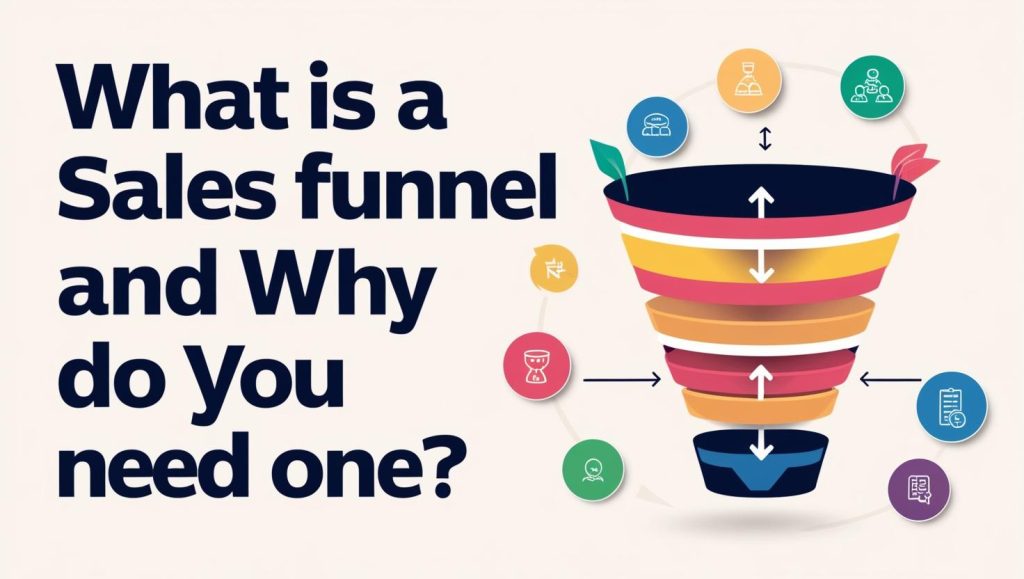
A sales funnel is designed to convert website visitors into customers quickly.
This funnel takes a prospect from awareness of your product or service to making a purchase within a few steps.
- Best for: Digital products, eCommerce, or online courses
- Example: A product landing page with a checkout process that includes upsells and order bumps
Webinar Funnel
A webinar funnel is commonly used for selling high-ticket products or services.
It educates potential customers before offering them a solution, increasing their likelihood of purchasing.
- Best for: Coaches, course creators, and consultants
- Example: A free live or pre-recorded webinar that teaches valuable insights and ends with a call to action for a premium offer
If you are unsure which type of funnel to start with, a lead generation funnel is often the safest option.
It allows you to build trust with your audience before offering them a paid solution.
Step 2: Map Out the Customer Journey
Once you have chosen the right type of funnel, it is essential to plan out the steps your customers will take from the first point of contact to the final sale.
This is called the customer journey, and each stage plays a critical role in ensuring a smooth and engaging experience for potential buyers.
Key Stages of the Customer Journey:
- Traffic Source – The channels that drive visitors to your funnel, such as social media, search engine optimization (SEO), YouTube, or paid advertisements
- Landing Page – A page specifically designed to capture leads or sell a product
- Thank You Page – A follow-up page that acknowledges the lead and provides additional information or the next steps
- Follow-Up Emails – A series of automated emails that nurture leads and encourage them to take further action
- Checkout Page – A seamless and simple checkout process that encourages conversion
Each stage should be optimized to move the prospect closer to making a purchase.
If the transition from one stage to the next is not clear, potential customers may drop off before completing their journey.
Step 3: Create High-Converting Landing Pages and Sales Copy
Your landing page is one of the most critical elements of your sales funnel.
It is the first impression potential customers will have of your offer, so it needs to be clear, engaging, and persuasive.
Essential Elements of a High-Converting Landing Page:
- A Strong Headline – Grabs attention and clearly states the benefit of the offer
- Engaging Copy – Explains what the visitor will get and why it matters
- A Clear Call to Action (CTA) – Encourages visitors to take the next step, such as “Download Now” or “Book a Strategy Call”
- Trust Signals – Testimonials, case studies, or guarantees that establish credibility
To create an effective landing page, consider using funnel-building platforms like ClickFunnels, GoHighLevel, Leadpages, or WordPress with Elementor.
These tools make it easy to design and launch high-converting pages without needing advanced technical skills.
Step 4: Automate Your Follow-Up With Email Sequences
Once a visitor enters your funnel, it is essential to keep them engaged through email automation.
Many leads will not buy right away, but well-crafted email sequences can nurture relationships and eventually convert them into customers.
Best Practices for Email Follow-Ups:
- Welcome Email – Thank the lead for signing up and introduce what to expect
- Value Emails – Provide additional insights, free resources, or case studies
- Sales Emails – Present your product or service and explain how it solves their problem
- Urgency and Scarcity – Create a reason to act now, such as limited-time discounts or bonuses
Popular email automation tools include GetResponse, ActiveCampaign, and Mailchimp.
These platforms allow you to schedule and customize emails to engage your leads effectively.
Step 5: Drive Traffic to Your Sales Funnel
A well-designed funnel is useless without traffic.
To generate leads and sales, you need to drive targeted visitors to your landing pages.
Free Traffic Strategies:
- Search Engine Optimization (SEO) – Optimize blog posts and YouTube videos to rank on Google
- Social Media Marketing – Share content on Facebook, LinkedIn, Instagram, and TikTok
- Content Marketing – Publish high-value content that naturally attracts your audience
Paid Traffic Strategies:
- Facebook & Instagram Ads – Run targeted ads to reach your ideal customers
- Google Ads & YouTube Ads – Use search-based advertising for higher intent audiences
- Retargeting Campaigns – Show ads to people who visited your funnel but didn’t convert
If you are starting with a limited budget, focus on organic traffic first and scale up with paid ads once your funnel is converting well.
Bonus: Get a Done-For-You Sales Funnel
Now that you understand the step-by-step process of setting up a sales funnel, it is time to take action.
If you would like a custom-built, high-converting sales funnel tailored to your business, I am offering a complimentary strategy session where we can discuss your needs.

Additionally, you can download my free book, Digital Marketing Certified, which provides even more insights into creating and optimizing sales funnels.
Visit http://DigitalMarketingCertified.com to get started today.
If you have any questions, feel free to leave a comment below. Let’s build your sales funnel together.
What is a Sales Funnel? (Beginner’s Guide to More Leads & Sales)
Frequently Asked Questions
The steps to create a sales funnel are: decide on the funnel type, map the customer journey into landing pages, create compelling copy for each phase, set up the landing pages and elements, and connect the landing pages into a funnel.
The 5 stages of a sales funnel are: Awareness, Interest, Decision, Action, and Retention.
You organize a sales funnel by connecting a series of landing pages within a funnel-building platform, ensuring a smooth transition from one step to the next for potential customers.
A sales funnel example could involve a lead generation funnel where a free guide is offered on the first landing page, followed by a thank-you page with a business introduction, and then a page offering a low-priced product or consultation.
A sales funnel is a journey you take your customers on, guiding them from initial awareness of your offerings to making a purchase.
You can set up a high-converting leads and sales funnel in approximately 72 hours.
The main types of sales funnels mentioned are lead generation funnels, direct sales funnels, and webinar funnels.
A lead generation funnel is designed to attract potential customers and introduce them to your business, focusing on nurturing relationships before a sale.
A direct sales funnel is most effective when you have a product or service that is ready for immediate purchase and a budget for advertising.
Coaches and course creators can benefit most from a webinar funnel, as it’s effective for selling high-ticket items.