
Have you ever felt like you’re doing everything you can to get leads and sales, but nothing seems to work?
You post on social media, send emails, and even try trending TikTok dances, but all you hear is crickets.
Where are the customers?
Click Below to Watch the Video…

Click Below to Watch the Video…
Why does your business feel like a ghost town?
That’s exactly what we’re going to fix today by diving deep into sales funnels.
If this term sounds complicated or like something only marketing wizards use, don’t worry.
By the end of this guide, you’ll not only understand it but be excited to build one for your business.
What is a Sales Funnel?
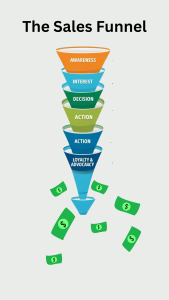
A sales funnel is a step-by-step system that guides a potential customer from first discovering you to becoming a paying customer—and, ideally, a loyal advocate for your brand.
Imagine you own a bakery that makes the best cupcakes in town.
If you simply set up shop and hope customers walk in, you might get lucky.
But if you actively guide people from discovering your bakery to buying your cupcakes (and coming back for more), then you’ve created a sales funnel.
Let’s break it down into five key stages:
1. Awareness
This is where potential customers first discover you.
They might see your ad, stumble upon your blog, or hear about you from a friend.
Without awareness, nobody can buy from you!
To boost visibility, use content marketing, social media, SEO, and paid ads to show up where your ideal customers are already hanging out.
2. Interest
Now that people know about you, they want to learn more.
They might visit your website, watch your YouTube videos, or follow you on Instagram.
At this stage, it’s all about engagement.
Provide valuable content like blog posts, webinars, and free resources to keep them interested and build trust.
3. Decision
Here’s where things get serious.
The customer is considering making a purchase but needs reassurance.
They might compare pricing, read reviews, or check testimonials.
Social proof is crucial here—showcase case studies, success stories, and money-back guarantees to boost confidence.
4. Action
The moment of truth! This is where your lead decides to buy.
Make it easy for them with a clear “Buy Now” button, seamless checkout process, and limited-time offers to encourage action.
But don’t stop there! Follow up with a smooth onboarding experience and additional value.
5. Loyalty & Advocacy
A happy customer is worth gold—not just because they’ll buy again, but because they’ll recommend you to others.
Offer exceptional service, send follow-up emails, and continue providing value.
When customers become loyal fans, they help grow your business through word-of-mouth marketing.
Why Do You Need a Sales Funnel?
Without a sales funnel, you’re leaving money on the table.
Imagine a customer walks into your bakery, sniffs around, and leaves because no one invited them to try a free sample.
A sales funnel ensures that every potential customer is guided towards a purchase instead of just window-shopping.
How to Build Your First Sales Funnel
You don’t need a massive budget or a tech team—just a simple system that moves people from “Who are you?” to “Take my money!”
Here’s how:
1. Start with a Free Offer (Lead Magnet)
People don’t give up their email addresses for nothing.
Offer them something valuable for free—like an ebook, checklist, or discount code—to capture their contact information.
2. Capture Their Information
Use a landing page where they enter their email in exchange for your freebie. This is your first step in building a relationship with them.
3. Follow Up with Emails
People rarely buy the first time they hear about you. That’s why email follow-ups are crucial. A well-crafted email sequence nurtures leads, builds trust, and encourages them to buy.
4. Make the Sale
Once they’re warmed up, present your product or service. Make it irresistible—add testimonials, limited-time bonuses, and special pricing to drive conversions.
5. Upsell & Build Loyalty
Ever noticed how fast-food chains ask, “Would you like fries with that?” That’s an upsell. If someone buys your basic package, offer them a premium version. And keep them engaged with valuable content over time.
Common Sales Funnel Mistakes
…(and How to Avoid Them)
🚫 Mistake #1: Trying to Sell Too Soon
You wouldn’t propose marriage on the first date, right?
Build trust first by offering value before asking for a sale.
🚫 Mistake #2: Not Following Up
80% of sales happen after the 5th follow-up. If you stop after one email, you’re losing money.
Automate your follow-ups.
🚫 Mistake #3: Not Optimizing Your Funnel
If you set up your funnel and forget it, you’re missing out.
Always test and tweak to improve conversions.
Ready to Build Your Sales Funnel?
If all of this sounds great but you don’t have the time to set it up, we can do it for you!
Our team specializes in 100% Done-For-You high-converting sales funnels.
📢 Go to www.DigitalMarketingCertified.com and get a FREE copy of my book Digital Marketing Certified.
Let’s get those leads and sales rolling in—without the guesswork! 🚀
How to Set Up a High-Converting Sales Funnel in 72 Hours (Step-by-Step Guide)
Frequently Asked Questions
A sales funnel is the journey a potential customer takes from first hearing about you to becoming a paying customer and ideally a loyal fan.
The 5 stages of the sales funnel are Awareness, Interest, Decision, Action, and Loyalty & Advocacy.
You build a sales funnel by starting with a free offer, capturing contact information on a landing page, following up with emails, making the sale, and then upselling and building loyalty.
Salesforce is not a sales funnel itself, but rather a CRM (Customer Relationship Management) platform that can be used to manage and track leads and customers throughout a sales funnel.
You need a sales funnel to guide potential customers through the buying process, ensuring they don’t just discover your business but are nurtured into making a purchase and becoming repeat customers.